

Greetings fellow People of the Knife…
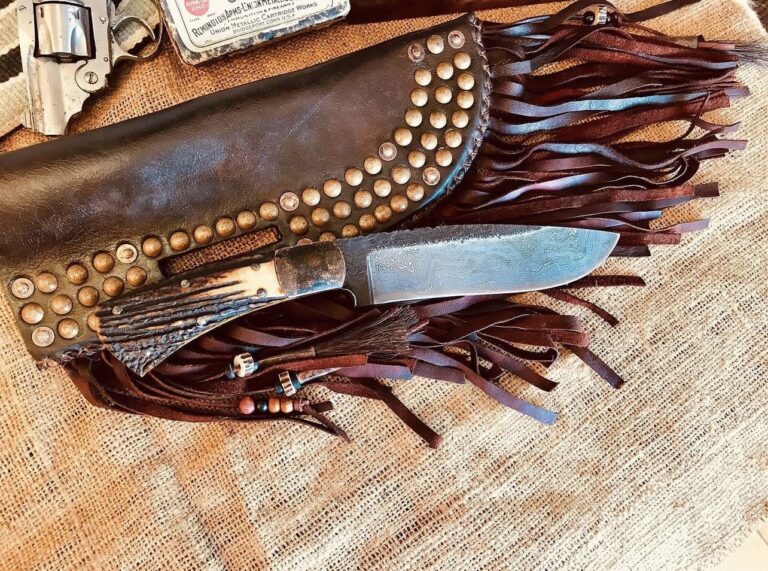
Today’s 5 from the Grinder comes from a little farther afield than usual. Martin Campanella of MC Knifemaker works out of Argentina, but his head is planted firmly in the American tradition — Scagel, Randall, Marbles, Winkler, Cohea…Bowies and Frontier Period knives – putting his own twist on historic and iconic patterns.
If you are a maker who would like to be featured in a future 5 from the Grinder, click here for more information.
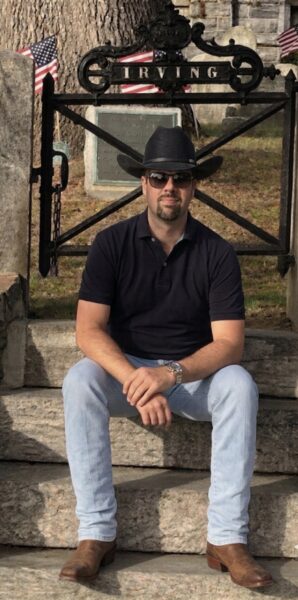
Please introduce yourself and let us know what led you to making/designing knives
I am an independent knifemaker from Argentina and the maker behind MC Knifemaker. I have been fascinated by knives since I was young, first as a collector and user. Growing up in Argentina, the knives I could most commonly access were folding knives and European hunting knives, which became the starting point of my interest. When I eventually began making knives myself, my interests shifted toward traditional American patterns and the history behind them. I became particularly drawn to makers and styles such as Marbles, Randall and W.F. Scagel, and later developed a strong interest in traditional Bowie and Frontier Period knives. What motivates me today is the opportunity to preserve traditional knife patterns that are becoming increasingly uncommon, while interpreting them through my own ideas and craftsmanship. I enjoy studying historical designs and combining elements from different periods and influences to create knives that feel traditional, functional and full of character.

What knifemaker(s) or designer(s) have had the biggest influence on you? Do you have any mentors?
W.F. Scagel, Bo Randall, Marbles, Daniel Winkler and John Cohea have had the greatest influence on my work. I was initially drawn to the classic American knife tradition through makers such as Marbles, Randall and Scagel. Their work taught me to appreciate the importance of traditional patterns, proportions, materials and functionality. Later, my interest in the Frontier Period led me to study the work of Daniel Winkler and John Cohea. Their approach to historical knives and their ability to combine authenticity, functionality and character had a strong influence on me. I was fortunate enough to speak with John Cohea before he passed away. He was kind enough to congratulate me on my work and teach me some tips and secrets. I don’t try to reproduce the work of these makers. Instead, I study the ideas and traditions behind their knives and use those influences as a foundation for developing my own interpretations.

What is your favorite knife pattern or style from history?
The Bowie is my favorite historical knife pattern. To me, the Bowie represents one of the most important chapters in American knife history. It has a strong connection to the early American frontier and to the story of James “Jim” Bowie, while also representing the transition from imported factory-made knives to knives that began to be developed and customized in the United States. What I love most about the Bowie is its character. It is a traditional pattern with a strong visual identity, but it also leaves room for interpretation. I particularly enjoy studying old examples and giving them my own character while remaining faithful to the spirit of the original designs. One of the pieces I am most proud of is my interpretation of a Musso Bowie, inspired by the knife associated with Colonel Jim Bowie. For me, it represents much more than a particular knife design: it represents tradition, history and the beginnings of the American custom knife tradition.

What is the next big thing in knifemaking? / What direction do you see the industry going?
I think the knife industry is moving in two very different directions. On one side, there is an increasing amount of highly sophisticated work, particularly involving Damascus steel, complex finishes and very high levels of craftsmanship. On the other side, there is a huge amount of production following similar contemporary full-tang designs, too many of those makers! I believe there is an opportunity in the space between these two extremes. Traditional and classic patterns are not being made as commonly as they once were, even though they have a tremendous amount of history, character and functional value. Many of the makers who preserved these traditions have passed away, retired or stopped making knives. I think there will be a growing appreciation for makers who study these older patterns, preserve their essential character and reinterpret them for today’s collectors and users. For me, the future is not necessarily about making something completely new. Sometimes it is about looking back, understanding what made an old design great, and giving it a new life through your own craftsmanship and vision.
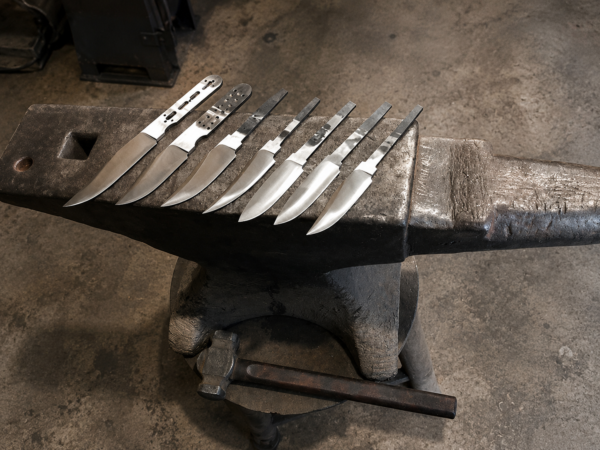
Is there a knife from your lineup that you feel best exhibits who you are as a knifemaker/designer in terms of design elements, aesthetic or techniques used?
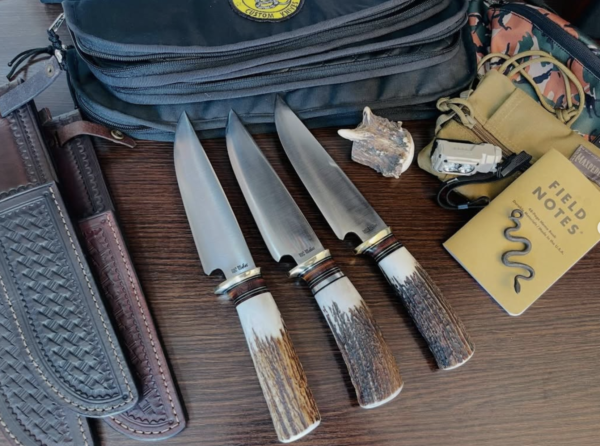
If I had to choose one knife from my lineup that best represents me as a maker, I would probably choose one of my Frontier Period knives. This style brings together many of the elements that I enjoy most: traditional American patterns, historical influences, natural materials, carefully shaped handles, brass fittings, leatherwork and attention to the overall character of the finished knife. Frontier Period knives are also among the most challenging pieces I make. They require a great deal of attention to proportions, details and historical character, while still leaving room for my own interpretation. I don’t want my knives to look like exact reproductions. I want them to feel as though they could belong to the period that inspired them, while still being recognizably my work. That balance between historical inspiration and personal interpretation is probably the best description of who I am as a knifemaker.

What is your EDC and why?
My EDC varies depending on where I am and what I am doing, but I most commonly carry a Buck 110, an Opinel, Victorinox or some old folding knife. The Buck 110 is probably the one that feels most natural to me. I appreciate its classic American character, proven construction and its connection to the hunting and outdoor knife tradition that has influenced me throughout my life. The Opinel and Victorinox are my choices when I want something lighter and extremely practical for everyday tasks. I enjoy using simple, proven knives that have been around for generations. Being a knifemaker has actually made me appreciate these knives even more. They remind me that a good knife does not necessarily need to be complicated — sometimes the most successful designs are the ones that simply work.
Find Out More:
Website: mcknifemaker.foo.ng
Instagram: @mc_knifemaker
Email: martincampanella@hotmail.com

Are you a maker who would like to be featured yourself? Click below to find out more.
Want to be featured on KNIFEMagazine.com? Participate in our “5 from the Grinder” series